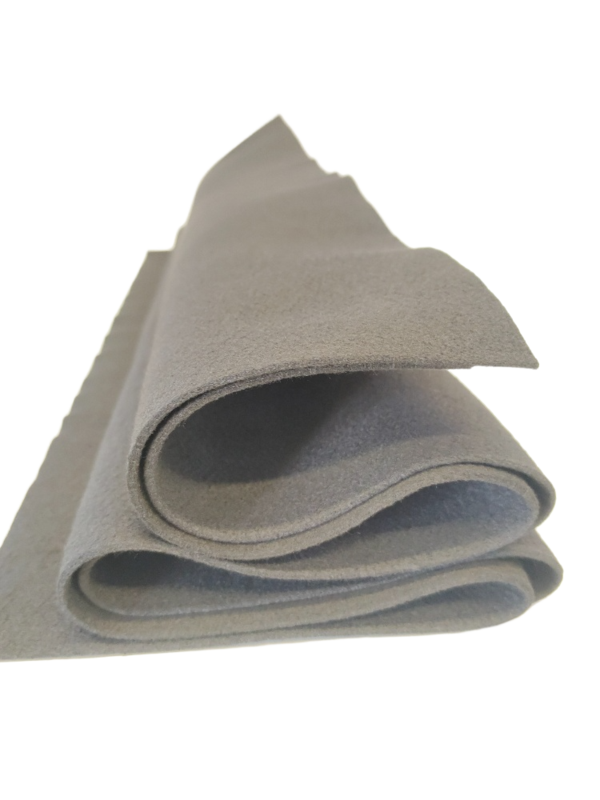
Activated carbon fiber felt
Activated carbon fiber felt
Activated carbon fiber felt
- Detail
- Parameters
product name | Activated carbon fiber felt | ||||
Product presentation | Active carbon, a porous adsorbent material, is widely used in odor control and separation. With its rapid development, the variety of active carbon has diversified, and carbon fiber (ACF) has emerged as the third-generation product, succeeding powdered and granular activated carbon. Activated Carbon Fiber (ACF), produced by carbonizing and activating natural or synthetic fibers, features pore sizes below 2nm. Its unique combination of irregular structures and narrow voids creates abundant nano-hetero-pores, resulting in an exceptionally high specific surface area. The material contains numerous large, regular structures—such as heterocyclic rings or functional groups—each contributing to its remarkable surface energy. This energy enables the interaction between micropores and pore walls to form a potent molecular field, creating a near-high-pressure system for adsorption. Consequently, adsorbates diffuse to sites faster than in granular activated carbon (GAC), with enhanced driving forces. | ||||
Product Features | ①ACF has a much higher adsorption capacity, several times to dozens of times that of GAC. ②The adsorption rate is very fast in the gas phase and can reach the adsorption equilibrium in the liquid phase, which is 10 to 100 times faster than that of GAC. ③ Easy to regenerate, desorption speed is fast, 120~150℃ steam or hot air 10~30 minutes. ④Good heat resistance. ⑤ It is acid and alkali resistant, with good electrical conductivity and chemical stability. 6. Less ash content. ⑦ Good formability and easy to process。 | ||||
Product use | ① Solvent recovery: benzene, ketone, petroleum can be adsorbed and recovered. ② Air purification: It can adsorb and purify odors, smoke, and toxic gases in the air. It is suitable for indoor air purification in rooms, kitchens, and other polluted areas. Particularly effective for adsorbing volatile organic compounds (VOCs) in newly constructed buildings. ③ Water purification: can remove the heavy metal ions, carcinogens, odor, mold, bacteria and decolorization in water, can be used for tap water, food industry water and industrial pure water treatment. ④ Odor-removing daily products: used for refrigerator deodorization, fruit/vegetable/flower preservation, and manufacturing household items including water purifiers, cigarette filters, anti-poison/anti-disease masks, shoe insoles, and health-care shorts. (5) It can be used as catalyst carrier, stationary phase of gas chromatography, etc. ⑥ Applications in electronic energy, such as manufacturing capacitors and battery electrodes. ⑦ High temperature resistant and heat preservation materials. ⑧ Environmental protection projects: waste gas and sewage treatment, enclosure and partition of radioactive sites, shielding of radiation equipment, etc. | ||||
Product specifications and parameters | |||||
Podel | TK-1000 | TK-1300 | TK-1500 | TK-1600 | |
Specific area(m²/g) | 900~1000 | 1150~1250 | 1300~1400 | 14500~1550 | |
Benzene adsorption value(%) | 30~35 | 36~43 | 45~50 | 53~58 | |
Iodine sorption value (mg/g) | 850~900 | 1100~1200 | 1300~1400 | 1400~1500 | |
Methylene blue adsorption value(mg/g) | 150 | 180 | 220 | 250 | |
PH value | 5.0~7.0 | ||||
Mean pore size | 18~21 | ||||
Carbon content(%) | 75~95 | ||||